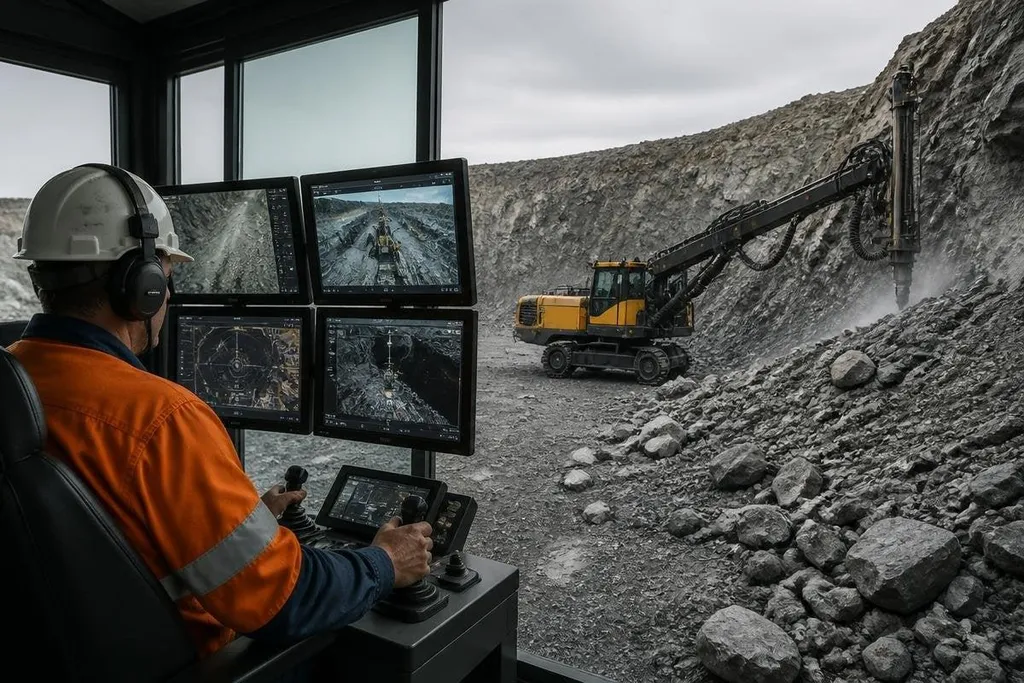
Mining robots can keep people away from loose rock, toxic air, heavy loads, and areas that may collapse. The safety gain comes from changing where the operator works, not from removing every hazard at the mine.
Quick read
- Remote control keeps operators outside the work area
- LiDAR and cameras help machines detect walls, vehicles, and people
- Maintenance, lost communications, and poor sensor readings still create risk
Where robots help first
A mining robot can take on work in a place that is too unstable, hot, dusty, or contaminated for a person. Remote-controlled loaders, drilling machines, haul trucks, and inspection robots can let the operator work from a protected room or vehicle.
That distance matters during tasks such as clearing loose rock after a blast. A person may still need to inspect the area, but the first machine entering it can check the ground and air before anyone walks in.
The machine does not need human-like movement to help. A tracked vehicle with cameras, a drill, or a scoop may be a better fit than a humanoid robot because mine work depends on traction, force, visibility, and control in tight spaces.
How the safety system works
Remote control is one part of the setup. Cameras send video to the operator, while LiDAR measures distance with laser pulses. A gas sensor can check for a dangerous change in mine air, and an emergency stop can cut motor power when a person enters a restricted area.
These systems work together. A camera may show a clear route, but dust can reduce the view. LiDAR may still map nearby walls, but it cannot tell an operator whether a surface will fall. The operator needs the sensor data, site rules, and a clear way to stop the machine.
Autonomous control can reduce the number of direct commands needed for repeated travel. The robot may follow a mapped route, keep a set speed, or stop when its sensors detect an obstacle. Those actions need tests in the mine itself, since dust, water, reflective rock, and changing ground can affect sensor readings.
A mining robot can keep a person away from a blast zone, but that safety gain depends on where the machine works and who takes over after a stop. Mining robot reports from Robot24.com can add the mine, machine, task, and test date before the next section asks where the danger moves.
The danger moves to new places
A remote machine keeps a person away from the face, tunnel, or haul route. It does not make the task risk-free. Someone still has to inspect the robot, charge it or refuel it, recover it after a fault, and repair damage.
Communication loss is another clear limit. A vehicle that stops in a tunnel can block other equipment and may need a person to enter the area. Mine operators need a safe recovery plan before they send a robot into a place that people cannot easily reach.
Sensor failure also needs a plain response. If the robot loses its position, sees a false obstacle, or reports uncertain gas data, it should stop or move to a known safe point. A safety claim without that behavior is incomplete.
I'd choose remote operation first for tasks with a clear boundary and a known recovery plan. Full autonomy should come later, after operators have measured how the system behaves around people, vehicles, dust, and changing ground.
What operators should check
A mine team can use this list before buying or testing a machine:
- Define the task. Name the work area, load, travel route, and hazards the robot must handle.
- Set the safe stop. Check what the machine does after lost contact, low battery, sensor failure, or an emergency-stop command.
- Test the sensors. Run trials in dust, darkness, water, reflective rock, and the lighting used during normal work.
- Plan recovery. Decide who retrieves a disabled machine and what equipment keeps that person out of danger.
- Measure the result. Record near misses, stop events, inspection time, and the number of people entering the work zone.
Those checks turn a robot from a remote vehicle into part of a safety plan.
The useful question is not whether the machine can move without a person beside it. It is whether fewer people need to enter the most dangerous area, and whether the mine can prove that change with its own records.